3-DAY EXPEDITION ITINERARY
Day 1: The Atlantic Marathon (A Coruña → Cambados)
Distance: ~225 km
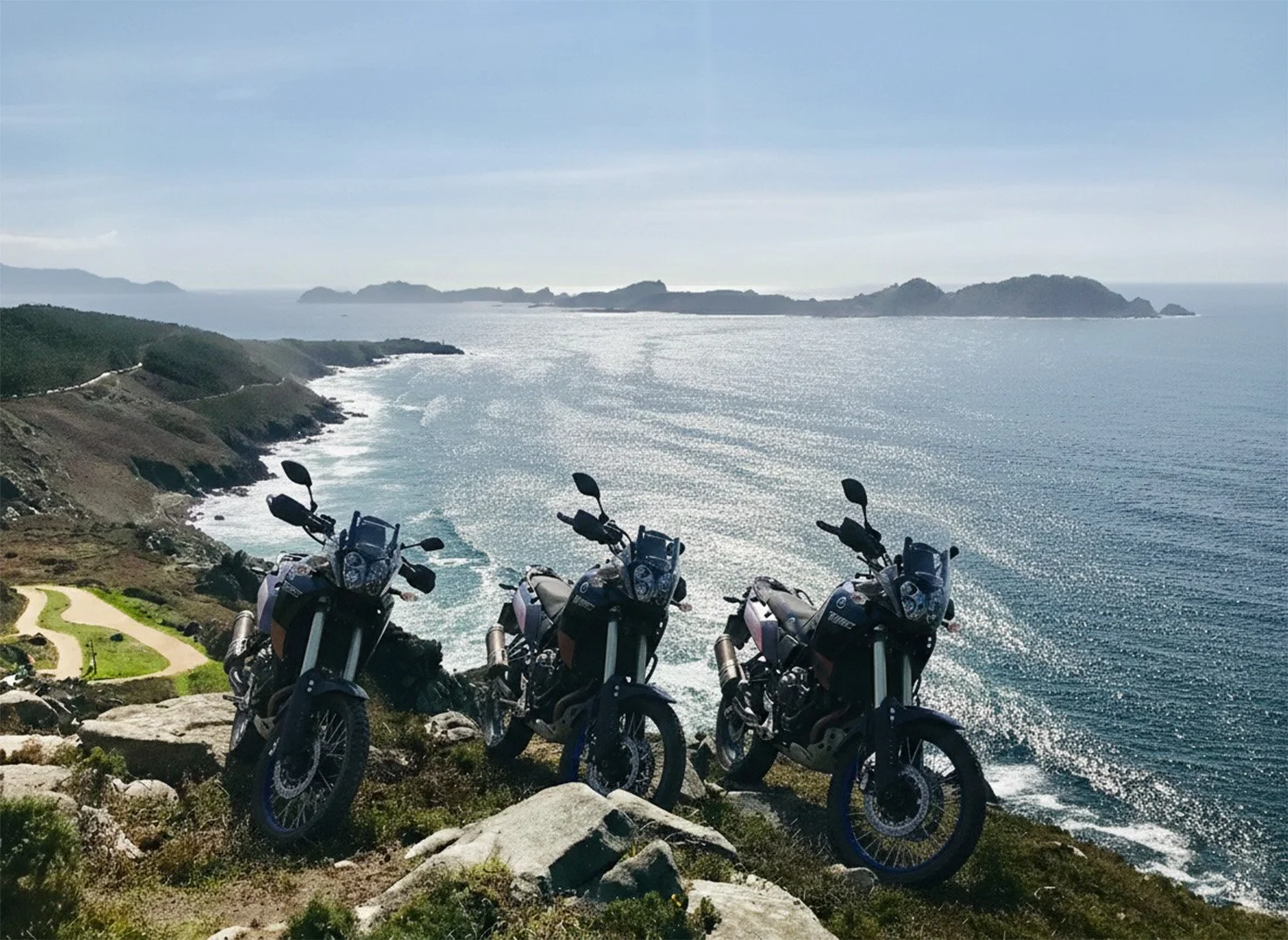
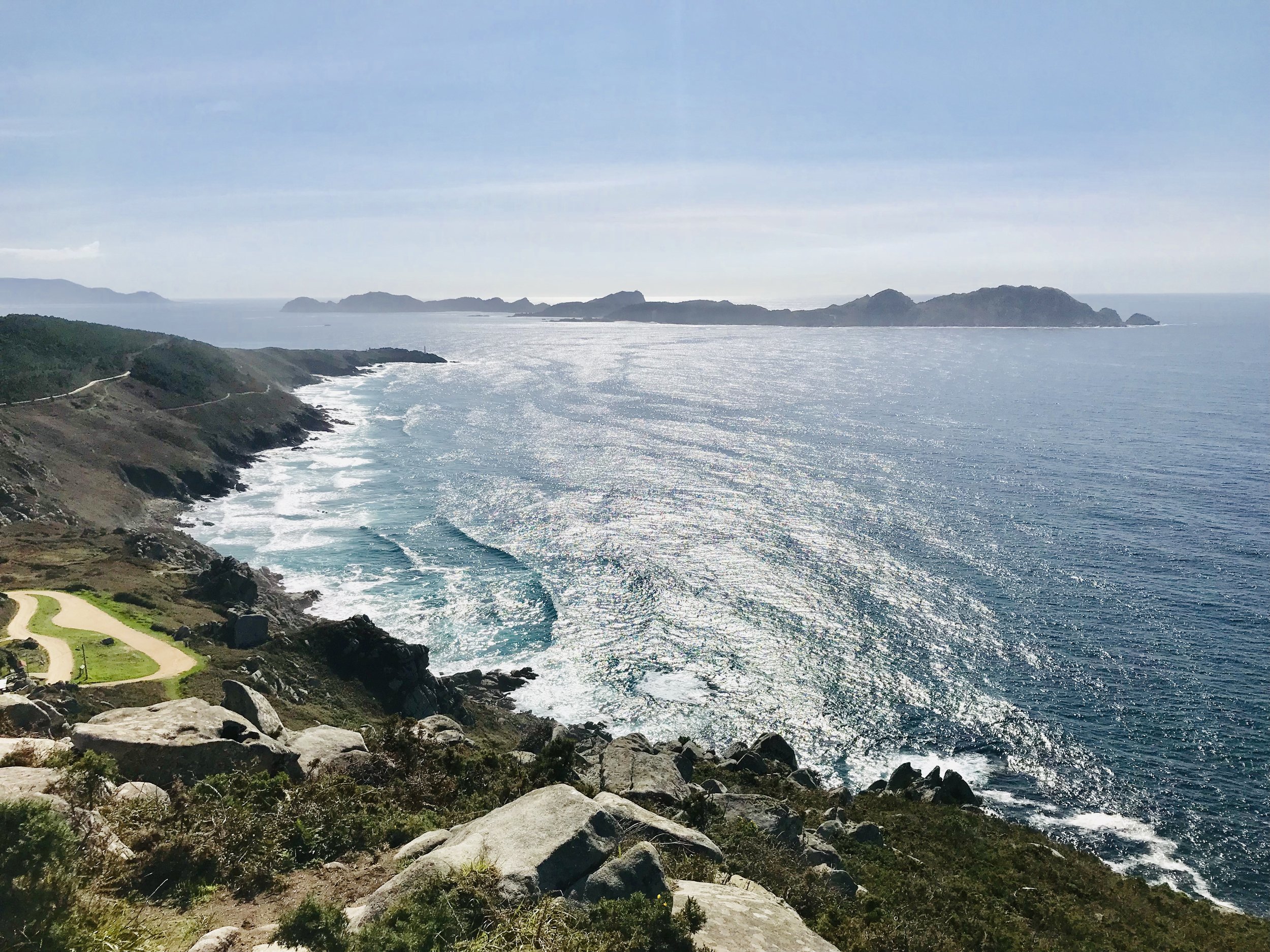
Highlights: From the Tower of Hercules to the stunning cliff roads of Muxía. Finish at the "End of the World" (Fisterra) before a sunset cruise into the heart of Albariño wine country.
Stay: Parador de Cambados (Historic 17th-century Manor). or similar.
Day 2: The Peninsula & The PO-552 Cliff Run (Cambados → A Guarda)
Distance: ~160 km
Highlights: The hidden lighthouses of Cabo Home in Donón and crossing the Rande Bridge. End the day on the PO-552, 30km of world-class coastal asphalt between Baiona and A Guarda.
Stay: Convento de San Benito (Restored 16th-century Convent). or similar.
Day 3: The Sacred Canyons (A Guarda → Parada de Sil)
Distance: ~165 km
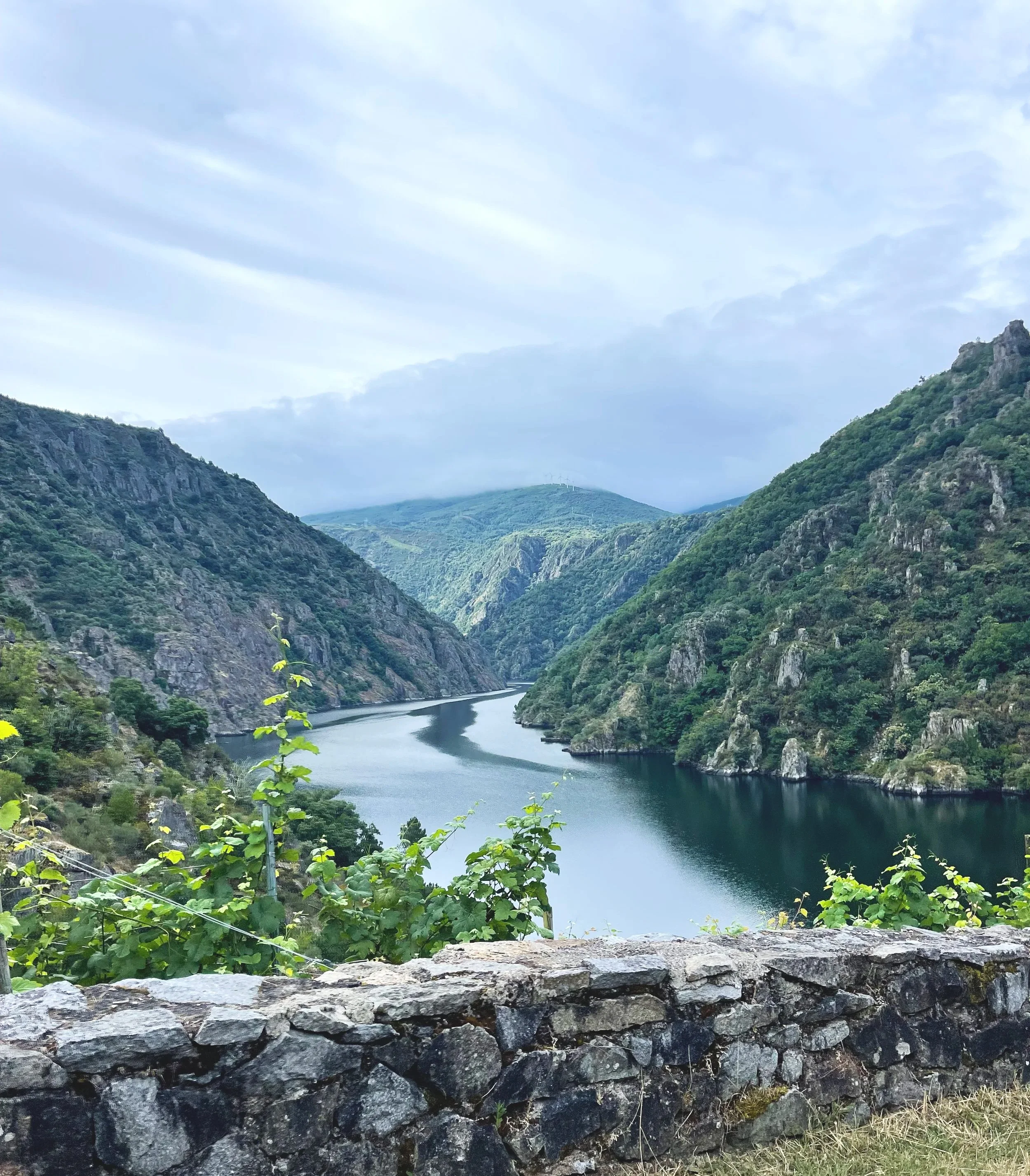
Highlights: Riding the Minho River border to the medieval Jewish Quarter of Ribadavia. Finish with the "Heroic Viticulture" twisties of the Sil Canyon and the vertical views at Balcones de Madrid.
Stay: Parador de Santo Estevo (10th-century Monastery Luxury). or similar.
Best Time of the Year
While Galicia is famous for its "eternal spring" (and a fair bit of rain), the prime window for riding is May to October.
Spring (May-June): The landscape is an explosion of neon greens and wildflowers, with waterfalls at their peak flow.
Summer (July-August): Unlike the scorching south, Galicia offers a temperate paradise with cool Atlantic breezes—perfect for long days in the saddle.
Early Autumn (September-October): This is the "sweet spot." The air is crisp, the crowds on the Camino have thinned, and the vineyards of the Ribeira Sacra turn a fiery gold.
Food & Drink
Galicia is a maritime sanctuary where the mountains meet the Atlantic. It is the land of Albariño and Ribeiro—crisp, mineral white wines that pair perfectly with the world's best seafood.
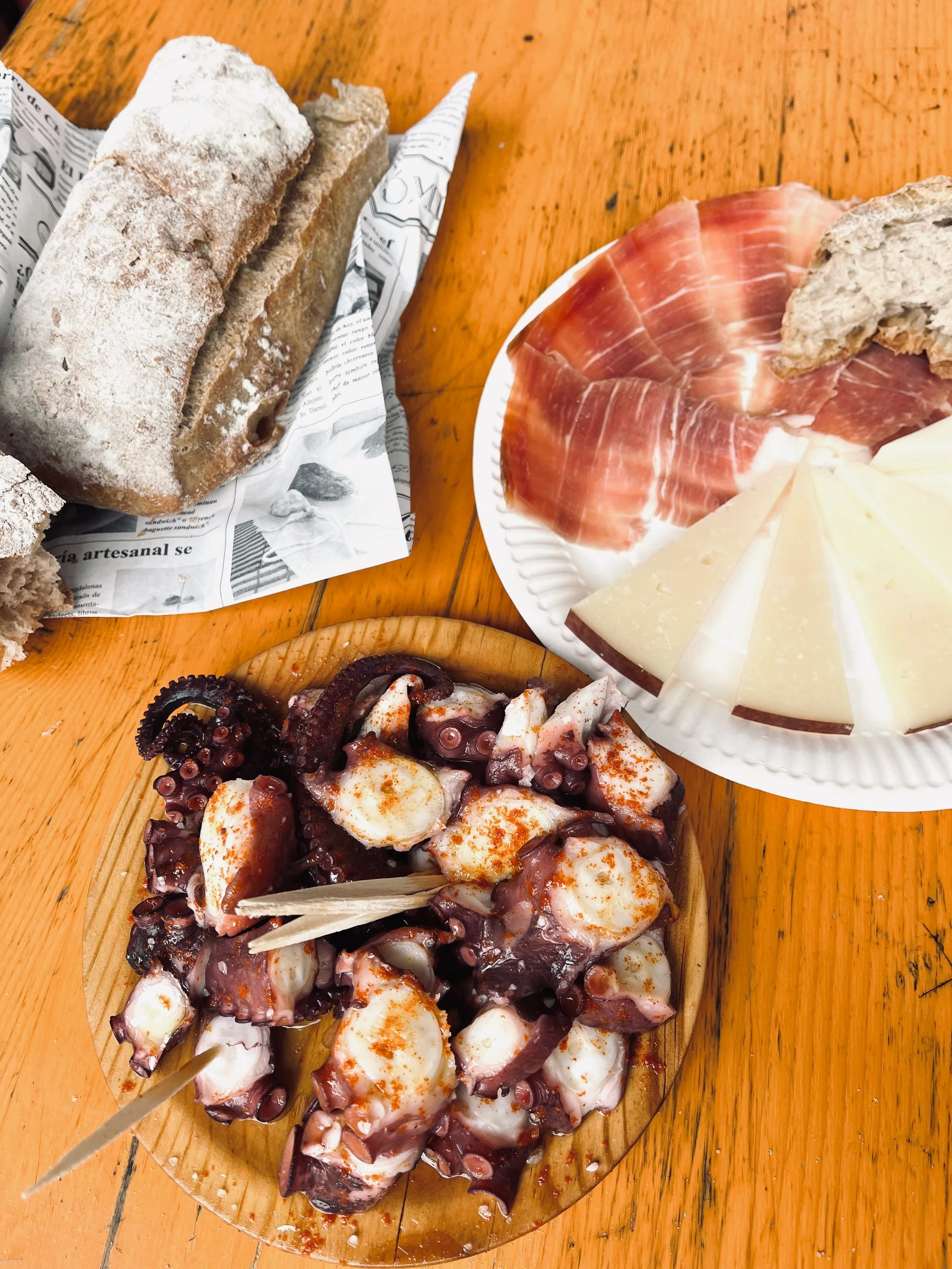
You haven't truly experienced the region until you’ve stopped at a rural taberna for Polbo á feira (octopus with paprika) or a hearty Caldo Galego after a misty morning ride. From the salty barnacles of the Costa da Morte to the protected peppers of Padrón, the gastronomy here is honest, abundant, and deeply rooted in the land.
Culture
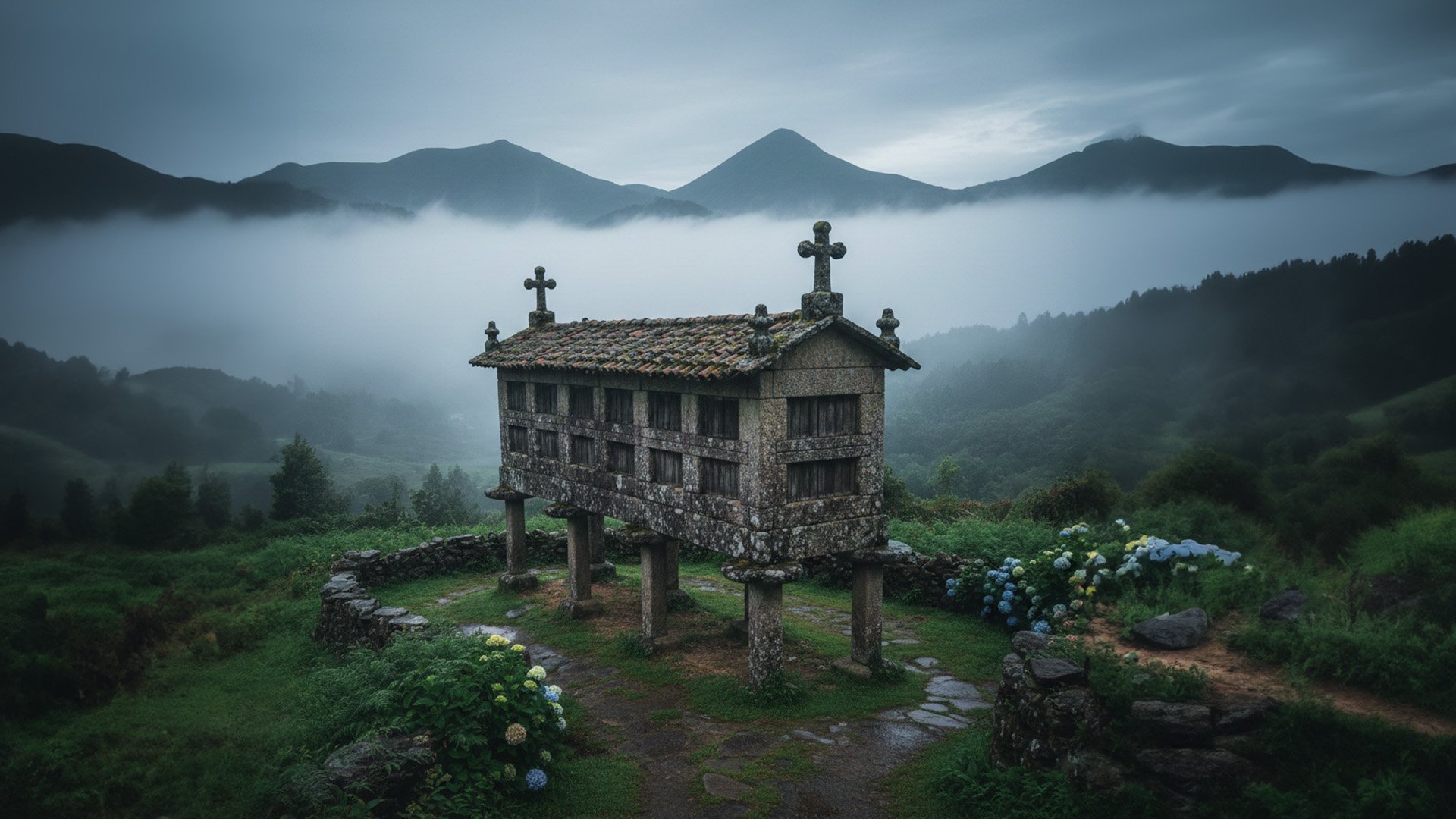
Riding through Galicia feels like navigating a living museum of Celtic and Roman heritage. Your route will take you past thousands of Hórreos (ancient stone granaries), mystical Cruceiros, and the towering Roman walls of Lugo.
The culture is defined by the Camino de Santiago, meaning every village you pass through is accustomed to welcoming weary travelers with open arms. Whether you’re standing at the "End of the World" in Fisterra or listening to the haunting echo of a gaita (bagpipe) in a granite-paved square, you’ll find a culture that is fiercely proud, slightly mysterious, and incredibly soulful.